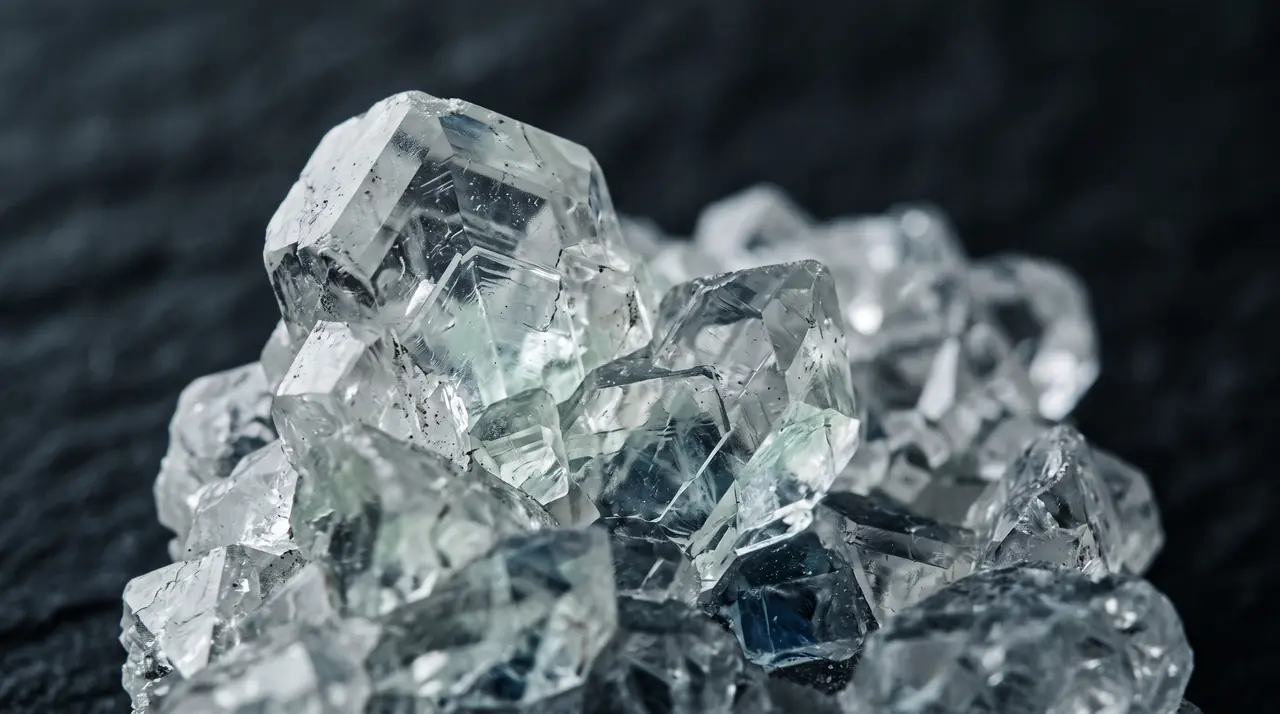
Division 05
Chemicals
Mining chemicals, mineral acids, industrial salts and gases. Every line ships with a safety data sheet, a batch certificate of analysis and a transport classification confirmed in writing before booking.
Mining chemicals
Sodium cyanide for gold and silver leaching, and sodium chlorate for chlorine dioxide generation. Cyanide is traded only with mining operators and licensed distributors able to evidence end use, permitting and site handling competence — an enquiry without that documentation cannot be progressed, regardless of the commercial terms attached to it.
- Sodium cyanide — briquette
- Sodium cyanide — solution
- Sodium chlorate — crystal
- Sodium chlorate — solution
- Transport classification
- Sodium cyanide — UN 1689, Class 6.1. Sodium chlorate — UN 1495, Class 5.1 oxidiser.
- Delivery formats
- Isotainer or approved packaging with full emergency response documentation accompanying every consignment.
- Prerequisites
- Verified end use, import licence, site handling capability and permitting evidenced before indication.
Mineral acids
Sulfuric, nitric and hydrochloric acid into fertiliser production, metal leaching and treatment, steel pickling, water treatment and oilfield stimulation. Nitric acid is an explosives precursor and carries end-use screening as standard.
- Sulfuric acid — technical, 93–98%
- Nitric acid — non-concentrated, HNO₃ 57–60%
- Hydrochloric acid — synthetic technical
- Transport classification
- Sulfuric UN 1830, nitric UN 2031, hydrochloric UN 1789 — all Class 8.
- Delivery formats
- Dedicated lined tanks and ISO containers. Equipment compatibility confirmed against concentration before fixture.
Industrial salts & gases
Ammonium chloride, sodium bicarbonate and carbon dioxide across technical, feed and food grades.
- Ammonium chloride
- Sodium bicarbonate — technical, feed, food
- CO₂ — gaseous
- CO₂ — liquid
- Applications
- Dry-cell batteries, soldering flux, textile printing and fertiliser blends; flue gas treatment, animal feed, food processing and detergents; beverage carbonation, food freezing and MAP, welding shield gas, greenhouse enrichment and pH control.
- Grade separation
- Food and feed grade material is supplied through dedicated equipment with certification appropriate to the destination food regulation.
Detergent alkylates & normal paraffins
One chain, traded as one book. Normal paraffins are extracted from the kerosene cut by molecular sieve; those paraffins are alkylated with benzene to produce linear alkylbenzene; heavy alkylbenzene comes off the same unit as the heavy co-product. A counterparty in one of these is frequently a counterparty in the others, which is why we quote them from a single desk rather than splitting them across the barrel and the chemicals book.
LAB is the feedstock behind linear alkylbenzene sulphonate — the dominant anionic surfactant in household and industrial detergents — so the buyer is a sulphonation plant, and the parameters that decide the trade are chain-length distribution, linearity and bromine index rather than a headline density.
- Linear alkylbenzene (LAB)
- Heavy alkylbenzene (HAB)
- Normal paraffins
- Linear alkylbenzene
- Detergent-grade alkylate for sulphonation into LAS. Specified on chain-length distribution, linearity, bromine index, sulphonability and colour — the assay governs, not a trade name.
- Heavy alkylbenzene
- The heavy co-product of the alkylation unit. Blended into lubricants and greases, transformer and process oils, and drilling fluid formulations. See also Base oils & additives, where lubricant blenders normally start.
- Normal paraffins
- Molecular-sieve n-paraffins in the detergent-range cuts, sold both as LAB feedstock and into chlorinated paraffin and solvent applications.
- Parcel formats
- Bulk chemical tanker parcels, ISO tank containers, flexitanks and drums, FOB, CIF or CFR. Certificate of Analysis per consignment.
- Documentation
- Producer or independent laboratory CoA against the agreed test-method schedule, plus SDS under REACH / CLP or the GHS format the destination enforces.
Documentation supplied as standard
Chemicals are the division where paperwork is not administration — it is the product. A consignment that arrives without the right classification does not clear, does not get accepted at gate, and does not get insured.
- Safety data sheet
- In the format and language required by the destination jurisdiction — REACH / CLP for the EU, GHS-aligned elsewhere.
- Certificate of analysis
- Batch-specific, issued by the producing plant, verifiable by independent laboratory where contracted.
- Transport classification
- UN number, class, packing group, IMDG / ADR / IATA status and segregation requirement confirmed in writing before booking.
Enquiries
Every enquiry is answered by a trader.
Send the product, quantity, delivery basis, destination and timing. We revert with availability, an indication and the documentation that accompanies it. Specifications are released once we know who we are speaking with.